Sorry son, this is what I’ve done
This is what I’ve done
It was a long sad supper without you
I had to be cruel to be kind
We have to leave the past behind
La la la
And isn’t it strange how people can change
And isn’t it weird how people I feared
They all seem worthless now
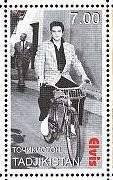
I will ride on my bicycle,
I ride thinking of you
As I’m riding on my tricycle,
I ride
I see the sun in the trees,
And I feel the psychedelic breeze
And I see the sun in the trees,
And I feel the psychedelic breeze
Sorry son, this is what I’ve done
This is what I’ve done
It was a long sad supper without you
Please don’t hold me responsible
I tried and tried
It wasn’t the same without my brain
It wasn’t a game, it wasn’t a game
Oh not now
I will ride on my bicycle,
I ride thinking of you
As I’m riding on my tricycle,
I ride
I see the sun in the trees,
And I feel the psychedelic breeze
I see the sun in the trees,
And I feel the psychedelic breeze
Album: John McCutcheon Four Season’ Summer Songs (1995)
John McCutcheon (born August 14, 1952) is an American folk music singer and multi-instrumentalist who has produced 34 albums since the 1970s.
Summersongs is the first of John McCutcheon's Four Seasons series of family albums celebrating each season of the year. McCutcheon, whose previous family albums have received awards from the American Library Association and Parents' Choice Magazine, masterfully evokes children's sentiments of summer, from swimming holes, ice cream men and lawn mowers to backyard camping and meteor showers. Adults will be surprised at how easily their own summer memories return. Come spend the summer with John McCutcheon and this uplifting family recording.
**Winner of the 1995 NAPPA (National Association of Parenting Publications) Gold Award **ALA (American Library Association) Notable Children's Recording **Grammy nominee for Best Musical Album For Children for 1995
"A terrific collection . . . most of the dozen tunes are irresistibly cheerful."—Booklist
"The first of a planned 'four seasons' series, this John McCutcheon masterpiece just might have you barefoot and mixin' lemonade in the dead of winter. The subject matter of the songs will bring a smile to kids and a memory to adults. . . ." —San Diego Parent Magazine
This looks so easy But this is so hard I practiced all summer Out in my back yard Mom running before me Dad right beside Watching me close With their arms open wide
Chorus
Mother, I'm flying Come catch me, Dad The most wonderful feeling That I've ever had I'm riding, I'm falling I'm falling, I'm riding I'm falling, I'm riding my bike
My friends all have fancy ones Ten, fifteen gears Mine is a Schwinn That my Mom's had for years With its big old fat tires Its ragged old seat I think it's the coolest bike Out on our street
Chorus
Tricycles, training wheels Tell them good-bye We just don't need them, My old bike and I Three wheels are too many One is too few Now that I'm six I'll just get by on two
Music in a Doll's House is the debut album by progressive rock group Family, released in July 1968. The album, co-produced by Dave Mason of Traffic, features a number of complex musical arrangements contributing to its ambitious psychedelic sound.
This obscure power trio is thought to have come from Boston, where they supported the Velvet Underground in 1969, the same year their sole LP appeared. An inspired blend of tough electric blues (Leavin' Trunk , Antique Locomotives), commercial songs with distinctive hooks (What Of I?, Pourscha Poe) and more overtly acid-influenced material (David's Rush, Yellow Wall), it's an overlooked psychedelic gem that deserves far wider recognition.
Their music covered a range of styles - heavy rock, blues and pop-rock with a dash of psychedelia. They had a unique sound. (…) Wilkinson Tri-Cycle remains a mystery. The notes indicate they may have been from the Boston area and played with The Velvet Underground at the Boston Tea Party March 13-15, 1969. That's it.
Artist: Solex Vs. Christina Martinez + Jon Spencer
Album: Amsterdam Showdown, King Street Throwdown!
Punk rock royalty Jon Spencer and Cristina Martinez have joined forces with Dutch electronic heroine Elisabeth Esselink “Solex” , for the most exciting collaboration/confrontation since The Jetsons meet The Flinstones. Imagine if you will, a fisticuffs of funk, garage and soul between Captain Beefheart and Ike & Tina, with a sprinkling of hip-hop courtesy of Mike Ladd.
The triumvirate have created a sonic dilemma with Amsterdam Throwdown, King Street Showdown! Do you listen or do you dance? Whichever, you’ll have your shrink on speed dial as you contemplate whether it mocks Jesus to have this much fun, what with the apocalypse being just around the corner and all.Amsterdam Throwdown, Kingstreet Showdown! kicks off with the sugar-fix that is “Bon Bon”, a dirty, funky bastard of a concoction, complete with strings.
“Galaxy Man” is an outer-space go-go party with Link Wray’s corpse! “Dog Hit” is a tale of irresponsible pet ownership, as if told by sexed-up and AWOL philharmonic orchestra members on MDMA! “Aapie” is a tribute to our ancestry and invites us to unleash our inner monkey! As you can see, there is something for all tastes.
Throughout, Elisabeth Esselink has ingeniously fattened up a rich tapestry of cool, the perfect canvas for Cristina and Jon, who pepper-spray it with personalized lunacy whilst shrugging off the wannabes scrambling for their plinth.To wit: 3 pioneers. Meet them in the street after dark. There’s gonna be a psychedelic genre-bending knife fight. So don’t forget your scuba fins and get ready to dance! You lucky, lucky bastards you.
Songs:Bicycle Revolution, Great Vision of a People on Two Wheels, Tricycle Evolution Stampede
Album: Bicycle Revolution (2008)
Jazz, instrumental
Johnny La Marama is an extraordinary jazz guitar trio from Berlin. Here you will hear both avantgarde and rock influences melting into an African ethnic sound. Free improvisation has a lot of room in the music, yet the rhythm remains steady. A loose ostinato is often the backbone of the music.
The appearance of a new album by Johnny La Marama is always a rare event. The word “rare” has several meanings: 1. occurring or found infrequently; markedly uncommon: a rare disease; the rare gas station on that stretch of the road. 2. having the component parts loosely compacted; thin; rare gases. 3. unusually great: a rare display of courage. 4. admirable, exemplary; She showed rare tact in inviting them. All of these definitions might apply, as the case may be, to this remarkable trio of musicians. But in this case- their third recording- it’s not just a rarity, it’s a revolution: Bicycle Revolution. The word “bicycle” means: 1. a vehicle with two wheels in tandem, pedals connected to the rear wheel by a chain, handlebars for steering and a saddle-like seat. 2. to ride a bicycle. Could the bicycle, here, be a metaphor for a self-generating collective meta-conscious revolution in motion? Relevantly, the word “revolution” has several meanings: 1. a complete and forcible overthrow and replacement of an established government by the people governed. 2. a sudden, complete, or radical change in something: a social revolution caused by automation. 3. a procedure or course, as if in a circuit, back to a starting point. 4. turning around or rotating, as on an axis. 5. the orbiting of one heavenly body around another. 6. a cycle of events in time or in a recurring period of time. As to the possibilities of a “bicycle revolution” in a contemporary utopio-musical conception: this writer believes that if Antonin Artaud, Albert Ayler and Hermann Helmholtz were still alive- and clad in guerilla army attire- they would gladly join forces with Johnny La Marama in this meta-vibrational invasion of bicycles and rubber boats upon the shores of today’s jazz scene, re-revolving their way into the far reaches of the galaxy, the Tiergarten and the imagination.
“Fellow earthlings- you six-Billion-plus CO2 exhalers- Join the Bicycle Revolution!” JLM introduces us to Bob Denard (the former French legionnaire soldier who found his true calling organising coupes in minor African states), played here by the band’s Franco-Finnish friend Charles Gil. Afro-beat flavour accompanies the troops pumping up rubber boats and oiling their bicycles. We can hear the two-wheeled guerrillas getting into sonic combat with the bomb-bass-tic explosions in Dahlgren’s solo. They ride ever-onwards, taking over the capital with their polyrhythmic bicycles and set up base-camp upon the ruins of the automobile factory headquarters. “The revolution won’t eat its children as long as they keep riding their bicycles. Let’s ride as long as our butts can take it!”
The Only Thing I Ever Wanted is the second album by Psapp. The album reached the UK Top 75 and the US Billboard 200 Albums, selling in excess of 800,000 copies in total.
"Tricycle" was the first single from the album to be released in Europe.
This London-based duo's formula of addictive melodies, electronic frolics, and found sounds have put them on the musical map. Silly noises married to sultry vocals and perspicacious lyrics produce recordings of shimmering originality and nascent charm. "The problem with a lot of electronic music is that it either takes itself too seriously or not seriously enough. Psapp offers the perfect solution: do both...knick-knacky sound effects, plucky violin, and whizzing bleeps over warm, elastic beats for a euphoric sound that's like a toy closet come to life" - SF Weekly.
…the exceedingly British female vox, eclectic percussion and random noisemakers (including what seems to be a rubber duckie on Tricycle) that are Psapp's staple are all still on display, never fear…
Tiny Lights , a music group formed by John Hamilton and Donna Croughn in , was one of the most unassuming and probably the most endearing folk-rock combo of the era.
The group's members employed a rich array of instrumentation, including cello, electric violin, soprano saxophone, tabla drums and bass clarinet. Improvisation was a constant feature of their live performances. One critic has memorably described the band as "Sly and the Family Partridge."
The ambitious Milky Juicy (1994), almost a summary of their career's experiments, was basically progressive-rock with a soul. Equally versed in free-form jams and riff-driven rave-ups, the new line-up used its versatility to increase the emotional depth of the music.
(…) Milky Juicy is the band's most adventurous, eclectic record. Comfortable in what it can do but undaunted by what it can't, Tiny Lights rifles through a sample-book's worth of styles, never sticking with one sound two songs in a row. The personality and family feel is never more evident (indeed, by this time Croughn and Hamilton had gotten married) or its sentiments and observations more accessible. Milky Juicy is the sound of a band following its heart. Scott Schinder / Scott Frampton
"Three Is a Magic Number" is one of the original 46 songs from the Schoolhouse Rock! series. Schoolhouse Rock! is a series of animated musical educational short films that aired during the Saturday morning children's programming on the U.S. television network ABC.
The inaugural song created for the series, the track was composed and performed in 1973 by Bob Dorough, musical director of the series.
In 1996, alternative group Blind Melon released a cover version of the song on the Schoolhouse Rock! Rocks album.
The song is also parodied by Jack Black in the movieSchool of Rock, when Black accidentally refers to the number 9 as "a magic number".
Jeff Buckley did a cover of this song in a live concert (1995-12-31: Mercury Lounge, New York City, NY, USA), and Embrace also covered the song.
De La Soul used some of the original lyrics in their version of "Three Is a Magic Number," although this hip hop version was very different from the original.
three is a magic number, yes it is, it's a magic number. somewhere in the ancient, mystic trinity, you get three as a magic number. the past and the present and the future, faith hope and charity, the heart and the brain and the body, give you three as a magic number.
it takes three legs to make a tripod, or to make a table stand. it takes three wheels to make a vehicle called a tricycle. ev'ry triangle has three corners; ev'ry triangle has three sides. no more , no less; you don't have to guess. when it's three, you can see it's a magic number.
a man and a woman had a little baby. yes they did. they had three in the family. and that's a magic number.
three times ten is thirty. three times nine is twenty-seven. three times eight is twenty-four. three times seven is twenty-one. three times six is eighteen. three times five is fifteen. three times four is twelve, and three times three is nine, and three times two is six, and three times one is three, of course.
three times one: what is it? three! that's a magic number.
a man and a woman had a little baby. yes they did. they had three in the family. and that's a magic number.
One of the most popular fusion and light jazz groups to emerge during the 1980s, Flim and the BB's comprised bassist Jimmy Johnson, keyboardist Billy Barber, percussionist Billy Berg and reeds player Dick Oatts. (For the record, "Flim" was an old nickname of Johnson's, while "the BB's" originated from Barber and Berg's shared initials). Debuting in 1982 with the album Tricycle, Flim and the BB's' fusion sound proved ideally suited for the onset of the compact disc boom; they were among the first artists to record utilizing digital technology, and albums like 1985's Big Notes and 1987's Neon quickly found a following not only among contemporary jazz fans but also among tech-heads. After 1988's Further Adventures, the quartet departed indie label DMP for Warner Bros., making their major-label debut a year later with New Pants. 1992's This Is a Recording was their final effort. ~ Jason Ankeny, All Music Guide
Mark Egan, who has a floating sound, is best-known for his leadership of Elements with drummer Danny Gottlieb. His first instrument was the trumpet, switching to bass at 16. Egan played with Ira Sullivan's group in Miami from 1974 to 1976 and then moved to New York where he toured with the Pointer Sisters and David Sanborn. Egan's big break was when he became a member of the Pat Metheny Group (1977-1980), recording and touring extensively. Since leaving Metheny, he has worked in many situations, including with Stan Getz, Jim Hall, the Gil Evans Orchestra (1983-1985), and John McLaughlin. Elements, which usually also features Bill Evans on reeds and keyboardist Clifford Carter, was formed in 1982 and has existed on a part-time basis ever since, recording for Philo, Antilles, Novus, and Bluemoon. ~ Scott Yanow, All Music Guide
A thorough understanding of folk traditions and a virtuosic mastery as an instrumentalist, John Kirkpatrick has risen to the top echelon of British folk music. A master of the button accordion, Anglo concertina, and melodeon, Kirkpatrick has balanced solo work; collaborations with his ex-wife and hammered dulcimer and oboe player Sue Harris in the 1980s; and session work with a lengthy and diverse list of artists, including Richard Thompson, Pere Ubu, Steeleye Span, Tarika Sammy, Gerry Rafferty, Tony Bird, and Loudon Wainwright III. Kirkpatrick has combined traditional folk music and modern…
(…) The delicious melodeon tune Pig On A Tricycle is a none-too-tenuously-named offering for the Redcar Sword Dancers, while John delights in his "swinging concertina bells" party-piece before ending the CD on a rousing note with the Lowry carol Rolling Downward. (…)
Voici le 1er album écrit, composé et interprété en anglais par Damien Saez ! Après sa prestation très remarquée aux Victoires de la Musique et en attendant son prochain album Rock à l'automne, Saez revient donc aujourd'hui avec un album de taille !!
The Only Thing I Ever Wanted is the second album by Psapp. The album reached the UK Top 75 and the US Billboard 200 Albums, selling in excess of 800,000 copies in total.
"Tricycle" was the first single from the album to be released in Europe.
This London-based duo's formula of addictive melodies, electronic frolics, and found sounds have put them on the musical map. Silly noises married to sultry vocals and perspicacious lyrics produce recordings of shimmering originality and nascent charm. "The problem with a lot of electronic music is that it either takes itself too seriously or not seriously enough. Psapp offers the perfect solution: do both...knick-knacky sound effects, plucky violin, and whizzing bleeps over warm, elastic beats for a euphoric sound that's like a toy closet come to life" - SF Weekly.
…the exceedingly British female vox, eclectic percussion and random noisemakers (including what seems to be a rubber duckie on Tricycle) that are Psapp's staple are all still on display, never fear…
Wild Carnation recorded their first album (Tricycle) in 1994: Brenda wrote all the lyrics, while the composition of music has been a collaborative effort amongst all three members of the band.The lineage of this northern New Jersey trio offers a polite starting point for understanding its sunny songs. Bassist/Vocalist Brenda Sauter played with both the kings of frenetic jangle, 'The Feelies', and the more folksy-leaning 'Speed The Plough'. But Sauter's new band, in which she does all the singing and lyric-writing, could've just as easily been high on the spirit of The Feelies when they wrote 'Tricycle', considering Wild Carnation's affinity for pop highs and jingly guitar sounds like those created by Glenn Mercer and Bill Million. Not to say at all that Wild Carnation is an exact rip-off of the Feelies but the group's sprightly electric/acoustic guitar interplay and driving melodies, along with Sauter's plaintive but firm vocals, that threaten to lift right off the ground in pursuit of the next billowy cloud are very reminiscent of her fellow ex-counterparts Glenn Mercer and Bill Million's tunes. Heartfelt dreamers and lovers of breezy acoustic pop are recommended to check out Wild Carnation's new album Tricycle, it's a crisp, fully-realized and lovely debut that captures the spirit of gorgeous song writing.
The heavy rock trio Core consists of guitarist/singer Finn, bassist Carmine, and drummer Tim. The group's intense mix of jazz, metal, and classic rock debuted in 1996 on their Atlantic Records release Revival; three years later, the group returned with The Hustle Is On, which was released on MIA Records and added acoustic elements to their sound.
William Ackerman is a guitarist and composer of acoustic-based instrumental music. He founded and ran for many years the influential new age record label Windham Hill Records.
In Search of the Turtle's Navel is the 1976 debut album. Some consider the album to be the start of New Age music. Ackerman's acoustic guitar improvisations, full of shifting moods and tempos, evocative and stirring, transformed him from a carpenter to a record company executive and charmed a surprisingly large audience. The music retains its power to move listeners today.
(…)This is Will Ackerman's first album, and sometimes, in some ways, I think it's one of his best. Keep in mind that this is a younger, brasher Ackerman, not very far at all from the modern fingerpicking traditions of John Fahey, Robbie Basho, and Leo Kottke. Rhythm, pattern, and melody line, played with the vigor of a good steel string. This album makes the connection between the west coast style and the more polished and controlled musician of the Windham Hill years. Ackerman gives himself away in his titles - Like 'Pink Chiffon Tricycle Queen', 'Slow Motion Roast Beef Restaurant Seduction', and 'What the Buzzard Told Suzanne.' This isn't about meditating to guitar music, it's about playing, listening, and appreciating the find work of a player/composer who went on to make a very significant mark in new age and jazz music. Some of these pieces, like processional, will reappear in different forms as Ackerman develops as a performer. Here it displays considerable muscle and surface tension. Later it will become more contemplative and inward bound. These early albums reveal the soloist side of the musician. In later years he will become more interested in cooperative efforts. None of it any less than great, by I keep coming back to the simple presentation he uses here, where he doesn't need to modulate the strength of his presentation.
Guided by Voices was an American indie rock band originating from Dayton, Ohio. Since the band's formation in 1983, it experienced frequent personnel changes, but always maintained the presence of principal songwriter Robert Pollard. Guided by Voices disbanded in 2004, though many of its former members remain musically involved in solo careers or other side projects.
Guided by Voices also garnered much attention for its prolific output, with a seemingly endless stream of releases. Most songs are in the two-minute range, but many are even shorter; often they end abruptly or are intertwined with odd and homemade sound effects.
Tricyclic Looper appears on “Box” (five cd), but was originally included in “Back To Saturn X”, album proposed/aborted in 1992. Box collects their first four limited-release albums and an LP of previously unavailable material, King Shit and the Golden Boys.
Tricyclic looper breaks his neck brings down the walls says it cool tricyclic looper says come on tries it ? that's not my school tricyclic looper free the man the man who earns a chain a day tryiclic looper it's a gas freedom now and have some class try issues field the play try with me that's okay drive around all your way drive me try issues field the play try with me that's okay drive me around your way drive me
come on loop, loop tricyclic looper loves his job choose it that way he's a slob tricyclick looper loves his job scream and shot takes some drugs and rides it out. tricyclic looper freedom man freedom chump who broke his hands tricyclic looper all they way all the day and all decay she don't nose around me I'm okay without don't you break me bottle baby I'm the one that said that triciclic looper triciclic looper triciclic looper come on loop